 VetBac
 Reliability
VetBac Reliability: Scientific Foundations and Quality Control
When antibiotic therapy decisions are made within hours, trusting the results is everything. VetBac was designed to deliver overnight, in-clinic disc diffusion antibiograms while maintaining a level of reliability that clinicians can confidently use to guide treatment.
Our Quality Control (QC) strategy is built on internationally recognized microbiological principles, adapted specifically for routine veterinary practice.
1. Standards and methodology we align with
VetBac follows the core principles of disc diffusion antimicrobial susceptibility testing (AST) as defined by:
- EUCAST (European Committee on Antimicrobial Susceptibility Testing), EU
- CLSI (Clinical & Laboratory Standards Institute), USA
These organizations define standardized AST methodologies, set quality control procedures, and specify bacterial reference strains and expected inhibition zone diameters (= QC ranges).
VetBac is not a reference laboratory system, but its design, workflows, and QC processes are guided by internationally accepted EUCAST/CLSI frameworks, ensuring scientifically sound and reproducible results in a clinical setting.
In short, the same microbiological rules apply, adapted for speed, simplicity, and in-clinic use.
2. QC testing in VetBac
To ensure reliability, several batches of VetBac plates are routinely tested before distribution.
What we test:
- Common veterinary pathogens
- Clinically relevant antibiotics
This allows us to verify that:
- Agar supports bacterial growth
- Antibiotic discs produce expected inhibition zones
- Plates behave consistently across batches
3. Example
Internal QC is based on standard reference strains because their expected inhibition zone ranges are well-defined.
In this example: Escherichia coli ATCC 25922 reference strain
How the test is performed:
- Bacterial suspension is prepared using routine clinical sample handling
- Inoculation is performed according to disc diffusion principles
- VetBac plates are incubated overnight (16-20 hours)
- Inhibition zones are measured (Figure 1)
- Results are compared against published QC ranges
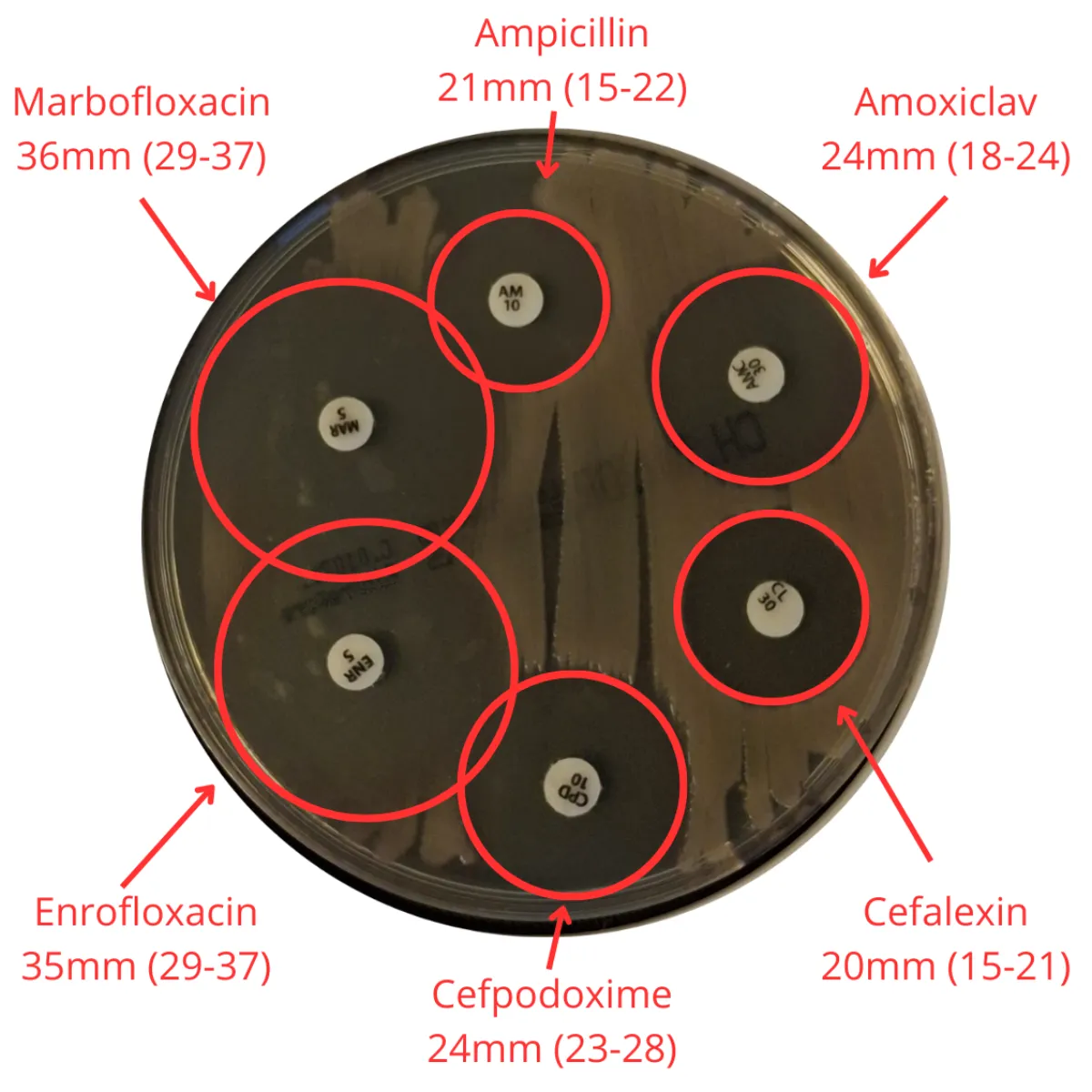
Figure 1. Quality control testing using a reference E. coli strain, showing measured inhibition zones and comparison with accepted QC ranges.
We do not rely on single measurements, but we analyze distributions of inhibition zone diameters across multiple repetitions.
What this shows:
- Median zone diameter aligns with expected values
- Variation remains within accepted QC ranges (Figure 2)
- No systematic shifts indicating diffusion or potency issues
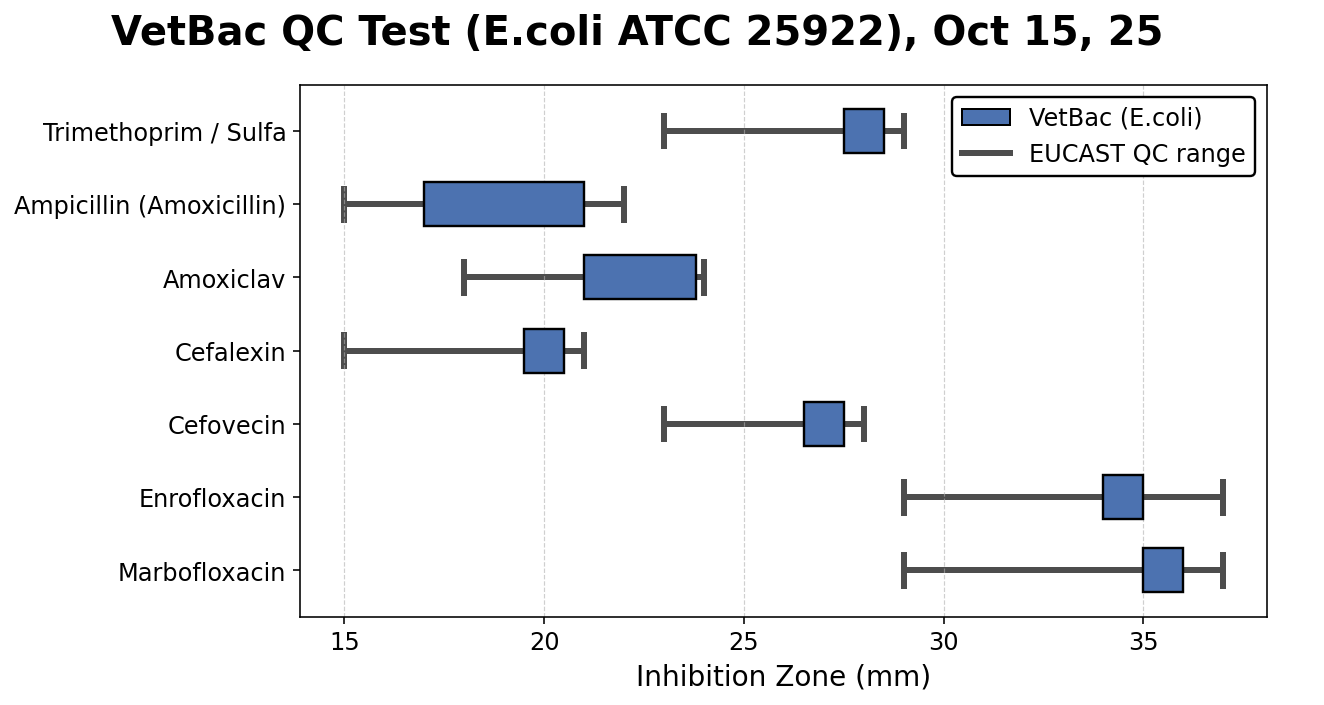
Figure 2. Distribution of inhibition zone measurements, shown in relation to accepted EUCAST QC ranges for selected antibiotics.
This QC approach confirms that VetBac plates produce stable, reproducible results, suitable for routine clinical decision-making.
4. What this means for your clinic
For veterinarians, this QC approach translates into:
VetBac does not replace reference laboratories, but it bridges the critical time gap between sampling and targeted therapy.